ServicesFurnace Installation
Furnace Installation in Rathdrum
We start every furnace replacement by looking over your old system, your venting and your gas line. Then we tell you plainly what we found and what size and type of furnace fits your home. You get a written quote before any work begins.
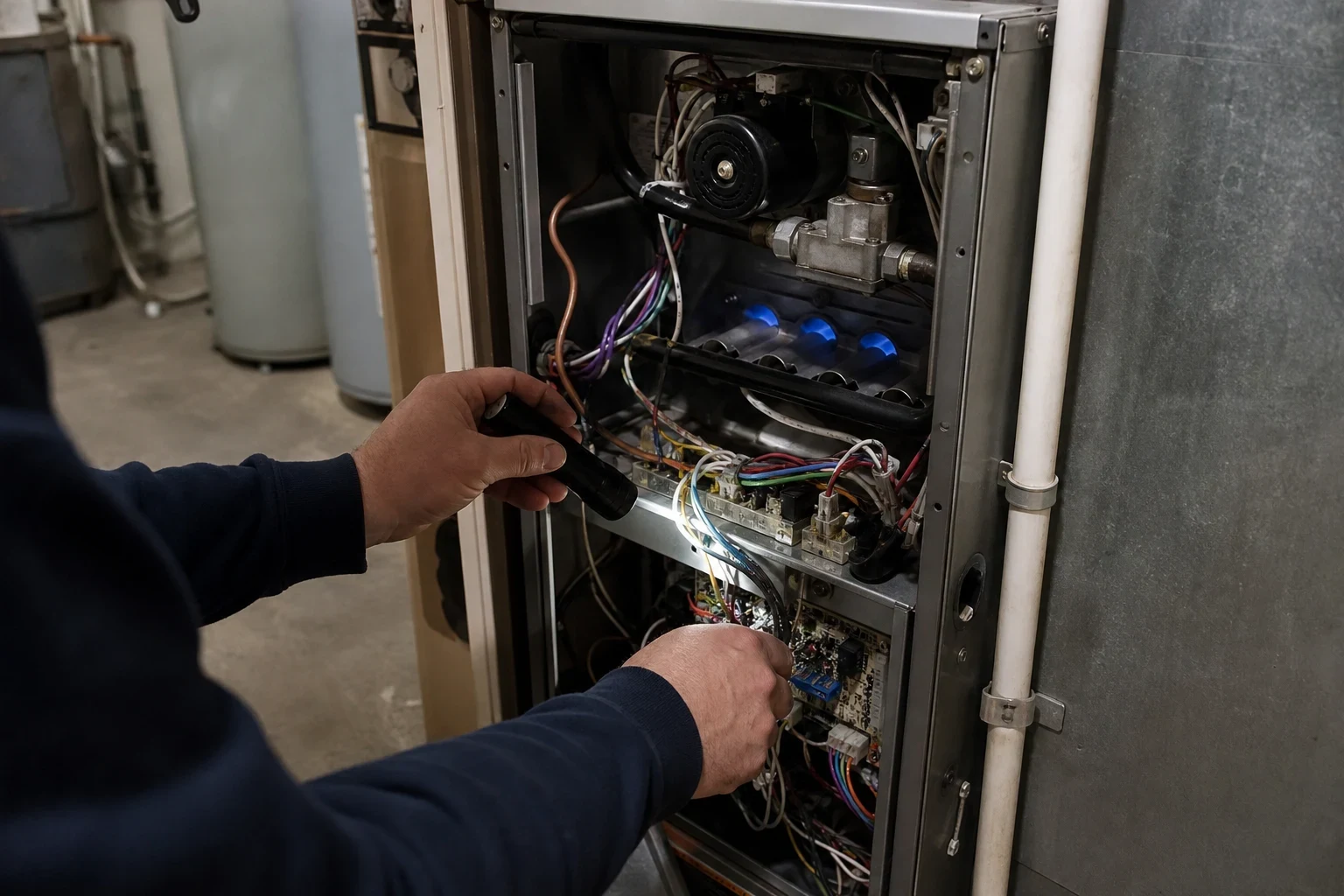
When a New Furnace Is the Right Call
Not every tired furnace needs replacing. Sometimes a worn igniter or a dirty flame sensor is the whole problem, and that is a job for our furnace repair crew. We will say so if that is what we see.
A new furnace makes sense when the heat exchanger is cracked, when repairs keep stacking up on an older unit, or when the system was never sized right for the house. Long, cold winters work a furnace hard here, and a unit that short cycles or runs nonstop costs you money every month.
We look first, explain what we found in everyday words, and let you decide. Estimates are free on installations and replacements.
What Your Installation Includes
A load calculation, not a guess
We measure rooms, check windows and insulation, and figure how much heat your home actually loses. Bigger is not better. An oversized furnace cycles on and off, wears out sooner and leaves cold spots.
Removal of the old unit
We disconnect, take out and haul away your old furnace. You do not have to deal with it.
Venting done to match the furnace
High-efficiency furnaces vent through PVC pipe and need a condensate drain. Standard-efficiency units use a metal flue, and an old masonry chimney may need a liner. We set up the venting the new unit calls for.
Gas or propane hookup and leak check
We connect the fuel line, test every joint for leaks and set the gas pressure to the manufacturer's spec.
Thermostat and wiring
We wire the new furnace to your thermostat, or to a new one if the old one will not work with it.
Permit and final sign-off
The paperwork is on us. We file for the mechanical permit and book the visit from the local building official, so your new furnace is on record and meets code.
Signs Your Furnace May Need Replacing
Repair bills keep coming
If you have paid for two or three repairs in a couple of seasons, add them up. Past a point, that money is better spent on a new unit.
A cracked heat exchanger
A crack can let burner exhaust leak into the warm air moving through your rooms, and that is a carbon monoxide risk. On most older units, the part and labor to swap it run close to the price of a whole new furnace. We take photos so you can see the crack for yourself.
Rooms that never warm up
Uneven heat can mean the furnace is too small, too big or simply worn out.
Fuel bills creeping higher
Burners, blowers and controls lose ground as they age. When your gas or propane use goes up from one winter to the next and you have not changed how you heat the house, a worn furnace is often to blame.
Yellow flame, soot or odd smells
Burners should burn blue. A lazy yellow flame or soot around the cabinet points to a combustion problem that needs a look right away.
How the Job Goes
- 1
Inspection and findings
We look over your current furnace, venting, gas line and thermostat. Then we sit down with you and go over what we saw, good and bad.
- 2
Written quote
You get a written quote that lists the furnace model, the venting and any extra parts. Nothing starts until you agree to it.
- 3
Install day
We lay down floor protection and shut off the gas. Then we pull the old unit and set the new one. Most replacements wrap up in a day.
- 4
Startup and testing
We fire the furnace, check gas pressure, temperature rise and carbon monoxide levels, and run it through full heating cycles.
- 5
Walkthrough and cleanup
We show you how to change the filter and use the thermostat, clean up the work area and leave you with the paperwork.
What Moves the Price
Furnace prices vary more than people expect. Once we have seen your system, you get a written quote, so you know the number before we start. Here is what pushes it up or down.
- Size and efficiency
- A larger furnace or a high-efficiency condensing unit costs more up front. A high-efficiency model can lower your monthly fuel bills.
- Venting changes
- Switching from a metal flue to PVC, or lining an old chimney, adds parts and labor.
- Fuel type
- Natural gas and propane units are priced differently, and a propane conversion kit may be needed.
- Where the furnace sits
- Crawlspaces and attics mean cramped working room, more trips and more hours on the clock. A unit in an open basement or garage comes out and goes in faster.
- Thermostat and extras
- A new thermostat, a condensate pump or a gas line change all add to the total. We list each one.
Furnace Installation Questions
Something not covered here? (208) 974-9411
How long does a furnace installation take?
Most straight swaps take one day. If we are changing venting or moving the furnace to a new spot, it can run into a second day. We tell you the plan before we start.
Will I be without heat?
Only during the install itself. We shut the old furnace off when we arrive and have the new one running before we leave on most jobs. On a very cold day we can bring portable heaters for the time the heat is off.
Should I get a high-efficiency furnace?
It depends on your home, how long you plan to stay and what your venting allows. We lay out the trade-offs plainly. If a standard unit makes more sense for you, we will say so.
Do I need a permit for a new furnace?
Yes. We handle the mechanical permit and line up the final code check as part of the job. You do not need to file anything yourself.
Should I consider a heat pump instead?
Some homes do well with a heat pump, often paired with a furnace for the coldest nights. We can price both so you can compare. Our Heat Pumps page covers that option in more detail.
Find Out What Your Home Needs
We will look over your current furnace, tell you what we found and give you a free written quote. If your heat is out tonight, we also handle 24/7 emergency HVAC repair.