ServicesAC Installation
AC Installation in Rathdrum
We look over your home before we talk equipment. We measure rooms, check insulation and windows, and look at your furnace and electrical panel. Then you get a plain written estimate for a system sized to your house, not the biggest unit on the truck.
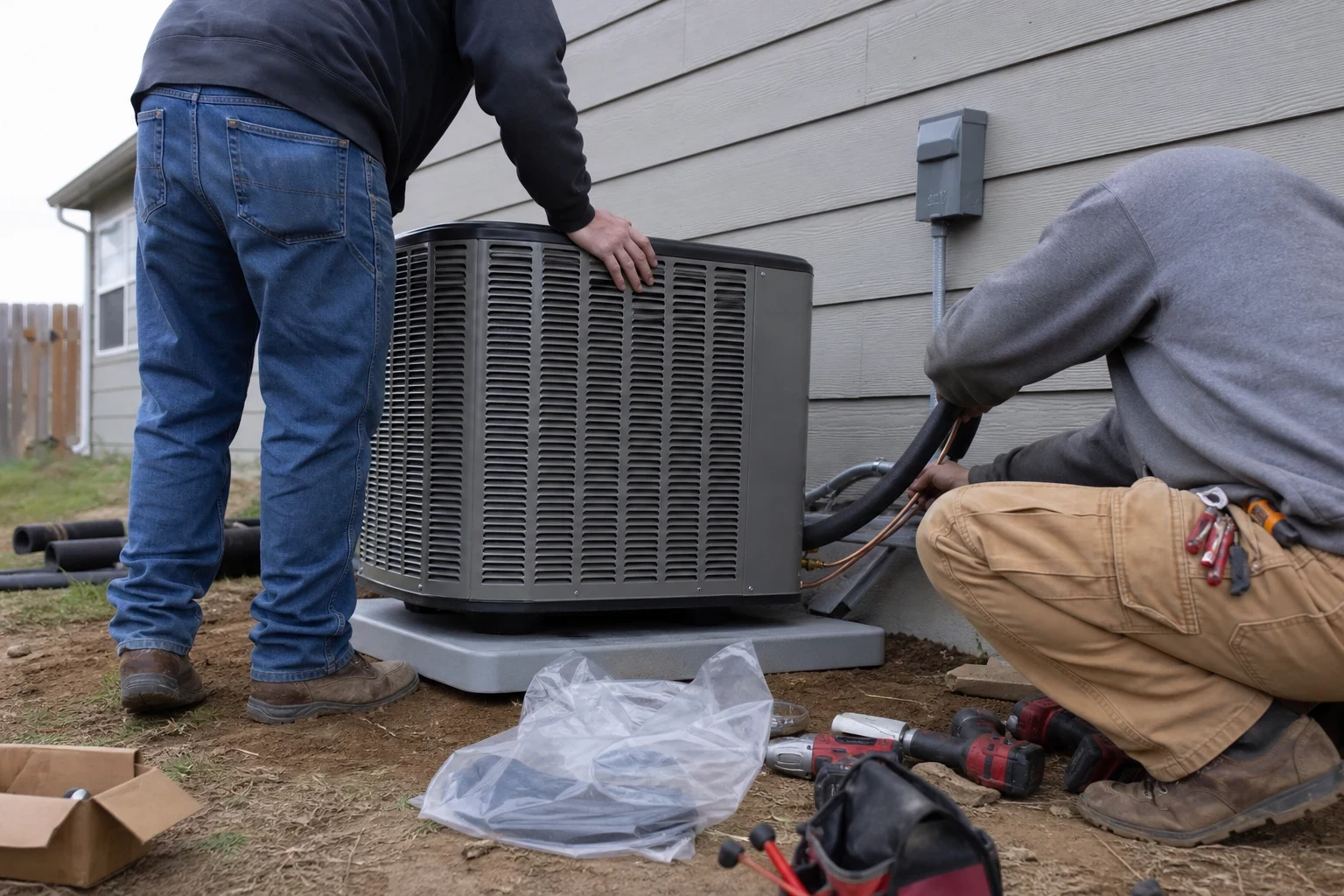
Getting the right air conditioner the first time
A new AC is a big purchase that should last many years. The most common mistake we see is a unit that is too big. It cools the house fast, shuts off, and never runs long enough to pull moisture out. You end up with cold, clammy rooms, uneven temperatures and a compressor that wears out early from starting and stopping.
So we start with a load calculation. That means measuring your home and accounting for insulation, window area, which way the house faces and how many people live there. The numbers tell us the size. We show you the findings and the math, then give you options.
If your current unit can still be fixed for a fair price, we will say so. Our AC repair page covers that side.
What a new AC install includes
- Home inspection and load calculation
- We measure every room and note insulation, windows and sun exposure. This sets the system size before we recommend anything.
- Matching the indoor equipment
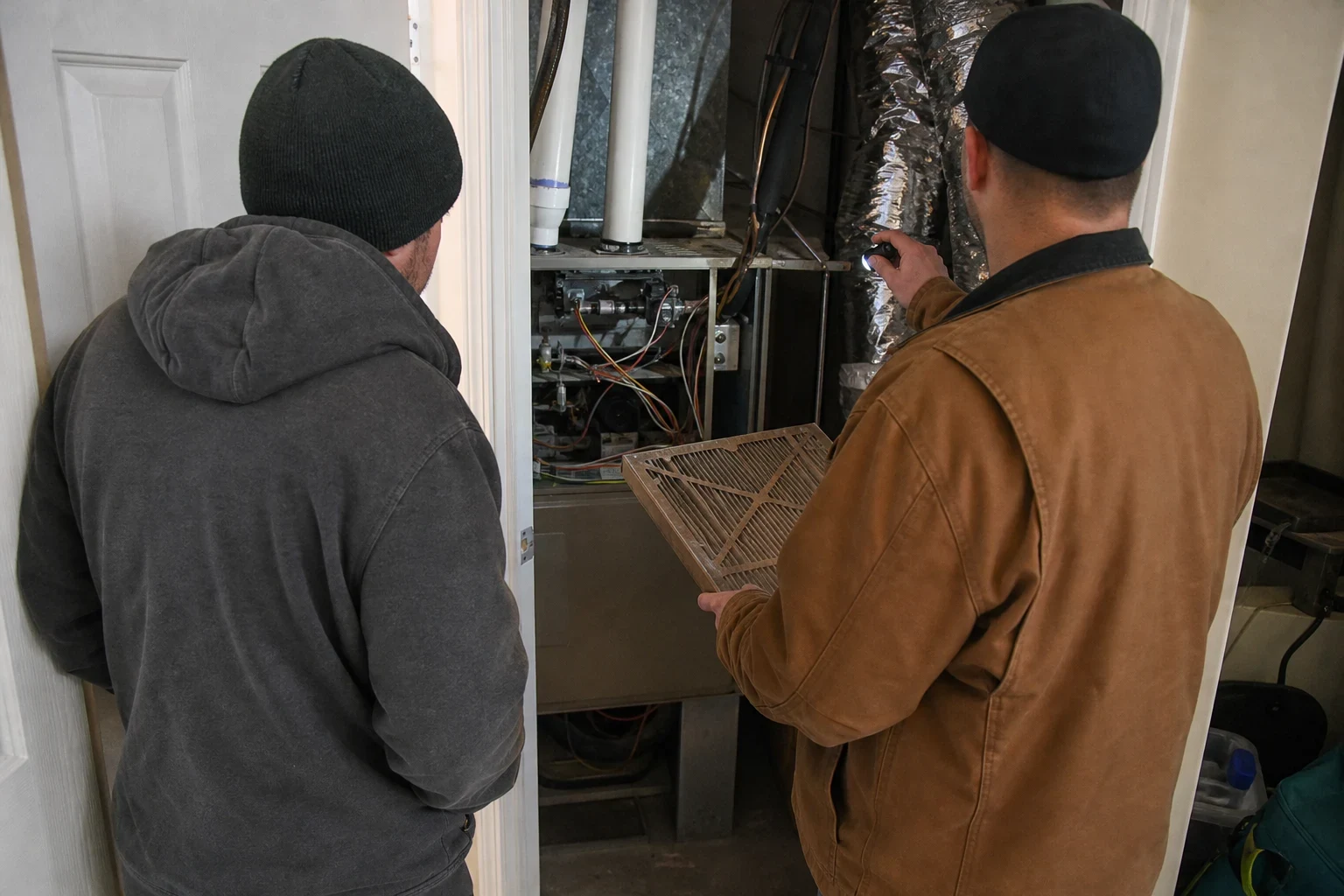
- A central AC works with your furnace blower and an indoor coil. We check that your furnace can move enough air for the new system and tell you if it can't.
- Outdoor pad and condenser
- We set the condenser level on a solid pad with clearance for airflow and service. We place it away from dryer vents and where snow off the roof won't bury it.
- Refrigerant lines, wiring and drain
- New line set where needed, a proper electrical disconnect, and a condensate drain that goes somewhere sensible. Lines are pressure tested and pulled into a deep vacuum before the refrigerant is released.
- Thermostat and startup
- We connect or replace the thermostat, run the system, and check temperatures and refrigerant charge against the maker's specs.
- Cleanup and walkthrough
- We haul away the old unit and packaging. Before we leave, we show you how the system works and what filter it takes.
Signs it's time for a new air conditioner
Same part, same problem, every summer
When the compressor or capacitor acts up again year after year, that repair money might do more toward new equipment. We'll look it over and tell you straight which way makes sense.
It still runs on R-22
Many older systems were built for R-22, a refrigerant that isn't produced anymore. Topping one off after a leak costs more every season.
Some rooms never cool down
Hot upstairs bedrooms or a stuffy back room often point to a unit that was sized wrong from the start.
Power bills climb every summer
An aging compressor works harder for less cooling. When July bills keep rising with the same habits, efficiency is slipping.
You've never had central air
Many homes here were built with a furnace and no AC. Hot dry summers and smoky late-summer air make closed windows and cooled, filtered air worth having.
What moves the price of a new AC
No two installs cost the same, and we won't quote a number over the phone without seeing your home. These are the things that change the price. Your written estimate shows each one so nothing shows up later.
System size
Tonnage comes from the load calculation. A properly sized unit is often smaller than people expect.
Efficiency rating
A unit with a bigger SEER2 number costs more to buy and draws less power each month. We put the options side by side based on how often you actually run your AC.
Furnace and coil fit
If your furnace blower can't support the new AC, or the coil doesn't fit the cabinet, that adds parts and labor.
Electrical and placement
A new circuit, a panel with no room, or a long line set run from the condenser to the furnace all add time.
Permit
New AC installs typically need a permit and inspection. We include that cost in the estimate.
How your install goes
- 1
Inspection visit
We walk through your home, take measurements, and look at the furnace, panel and outdoor space. It takes about an hour.
- 2
Written estimate
Nothing gets installed until the quote is on paper and in your hands. It breaks out the equipment, the labor and the permit on separate lines. Estimates are free on installations and replacements.
- 3
Install day
Most central AC installs take one day. We lay down floor covers, keep the work area tidy and tell you when power will be off.
- 4
Testing and handoff
We start the system, check charge, airflow and temperature split, and walk you through the thermostat. We clean up and take the old equipment with us.
AC installation questions
How do you decide what size AC I need?
We do a load calculation based on measurements of your home, insulation, windows and sun exposure. We don't size by square footage alone or by copying the old unit. If the old one was the wrong size, matching it repeats the mistake.
Can I add central air if I only have a furnace?
Usually, yes. A central AC uses your furnace blower to move cool air, so we check that the furnace is in good shape and can handle the airflow. If it can't, we tell you before you spend anything.
Should I look at a heat pump instead?
It's a fair question. A heat pump handles summer cooling and can also warm your home on mild days, so the furnace runs less in spring and fall. If you lean that way, we'll walk you through the paperwork for the Avista rebates and federal tax credits a heat pump can qualify for. Our Heat Pumps page has more on how they compare.
How long does installation take?
Most straight swaps or add-ons are done in one day. Jobs that need a new electrical circuit or a long line set can run into a second day. We give you the plan up front.
What should I do to get ready?
Clear a path to the furnace and the spot outside where the condenser will go. Put pets somewhere safe. We handle floor protection and cleanup.
Start with a look at your home
We'll come out, measure, and give you a written estimate with the findings behind it. No pressure to decide that day.